A company offsite has an awkward brief: it has to produce real work and also feel like a break, and doing only one of those is the usual failure mode. Las Vegas is a practical choice for the first part — it is one of the easiest cities in the country to fly a distributed team into — and a slightly risky one for the second, because the city will happily supply distraction you did not plan for. Here is how to structure it.
Why Las Vegas works for an offsite
The honest reasons are logistical. Harry Reid International is served by most major carriers with a lot of direct routes, which matters enormously when your team is spread across several cities — the whole group can usually arrive and depart within the same few hours. Accommodation supply is deep, so you are not fighting for the only suitable property in town. And there is enough to do that the evenings look after themselves without you building an entertainment programme.
The risk is the obvious one: a city designed around distraction is not automatically a good place to concentrate. That is mostly solved by where you base the group, not by whether you come here at all.
Hotel block or private house?
For an offsite specifically, this is a question about the working hours rather than the sleeping ones.
A hotel gives you meeting rooms, AV equipment, catering and someone else's staff to run it. If your agenda is genuinely conference-shaped — presentations, breakouts, a hundred people — take the hotel. That is what it is for.
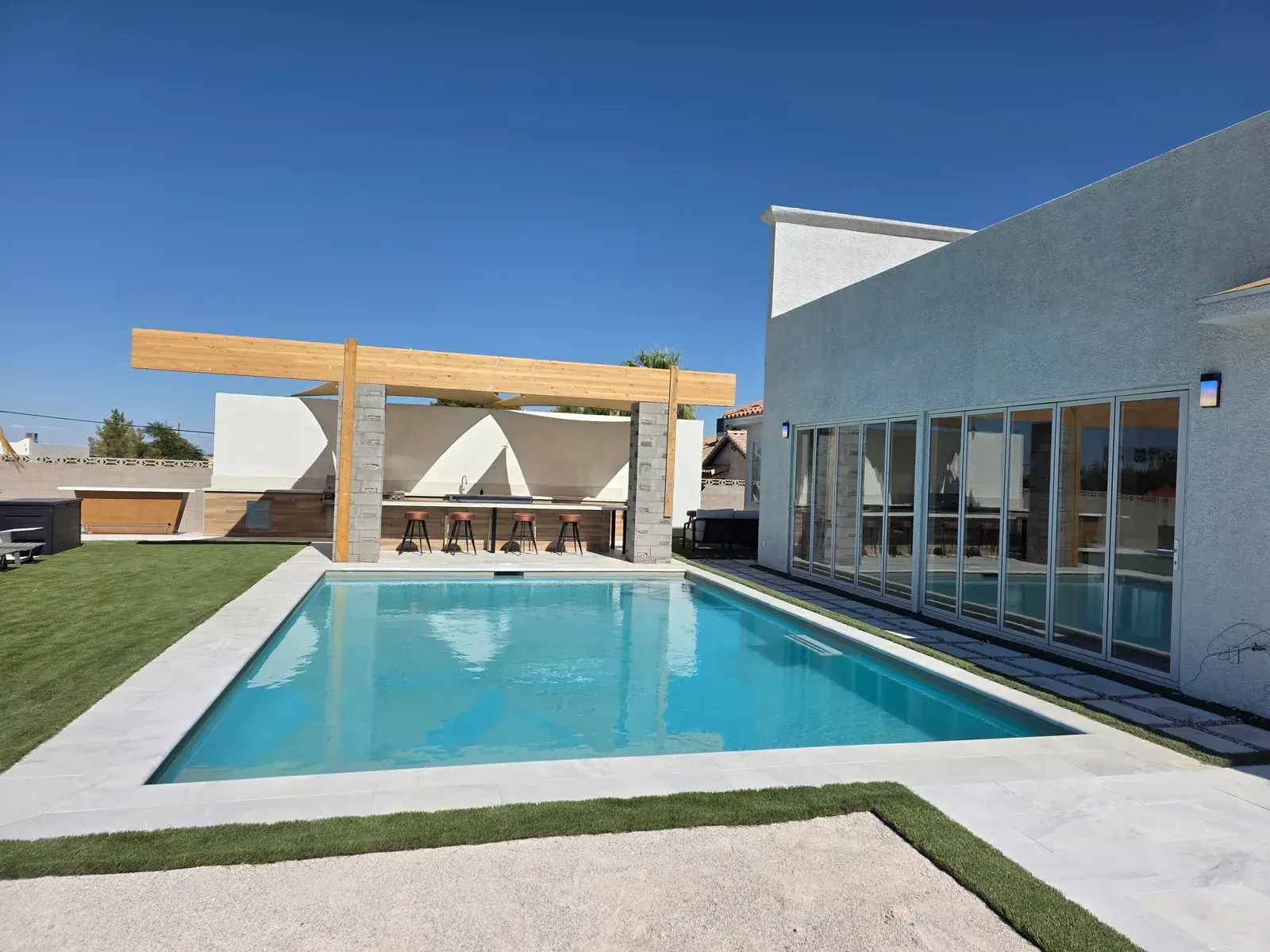
A private house wins for smaller teams, roughly eight to twenty-five, whose agenda is conversation rather than presentation. The advantage is not the meeting space; it is the unstructured time around it. The best parts of most offsites happen at breakfast, over dinner, or sitting outside after the session ended — and in a hotel those hours dissolve as everyone retreats to their own room. In a house they do not. Our villa versus hotel comparison covers the cost side in more detail.
Check the working space specifically
Houses are rarely designed for work, so verify rather than assume. The things that actually matter:
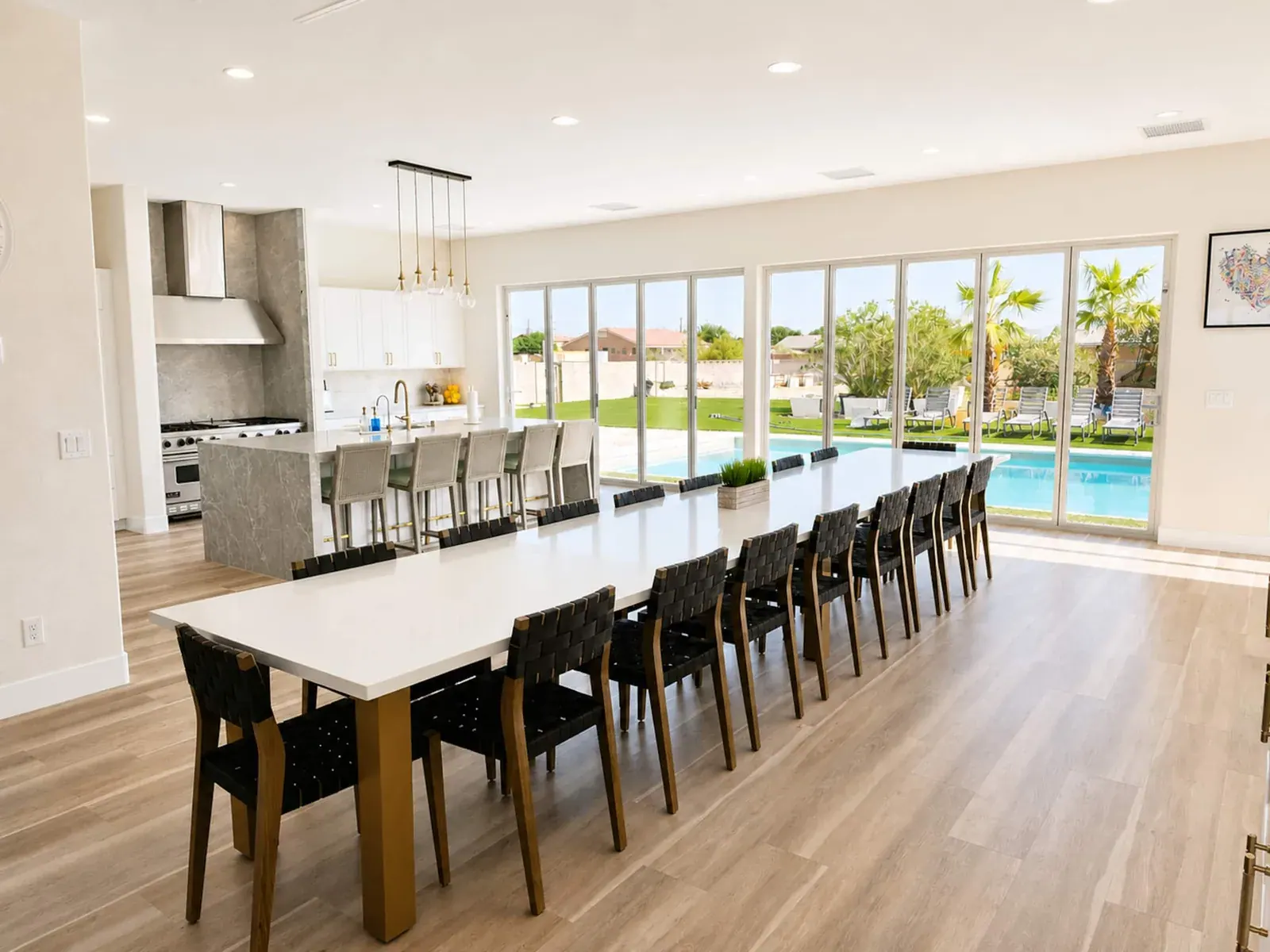
- One table everyone fits around. This is the real meeting room. Count the seats before you book.
- A screen you can present to. A large TV in a common room does most of what a projector does, provided you bring the right adapter.
- Breakout corners. Two or three places where a pair can peel off and talk, so parallel conversations do not have to happen in bedrooms.
- Reliable connectivity, and a mobile signal, if anyone needs to take a call.
- Power near the table. Mundane and routinely forgotten.
Structure the days honestly
The most common mistake is scheduling an offsite like a work week and expecting the team to be energised by it. A two- or three-day retreat supports roughly four to five hours of real structured work per day. Past that, attention drops and the sessions stop producing anything you could not have got from a video call.
A shape that holds up: mornings for the sessions that need everyone sharp, a genuine break in the middle of the day, one lighter afternoon block, and evenings deliberately unstructured. Put the hardest conversation on the first morning, not the last — teams decide things better before they are tired, and it leaves room to revisit anything unresolved.
Meals do more work than any team-building exercise
If you take one thing from this: eat together, and cook at least one meal as a group. Shared food is the highest-return, lowest-effort team activity there is, and it consistently outperforms the organised alternatives. A kitchen and a table that seats everyone are more valuable to an offsite than a scheduled activity block.
Practically, mix it: one dinner out somewhere good, one cooked at the house, breakfast informal every day. Confirm dietary requirements before you arrive rather than discovering them at the first meal.
Downtime is part of the agenda
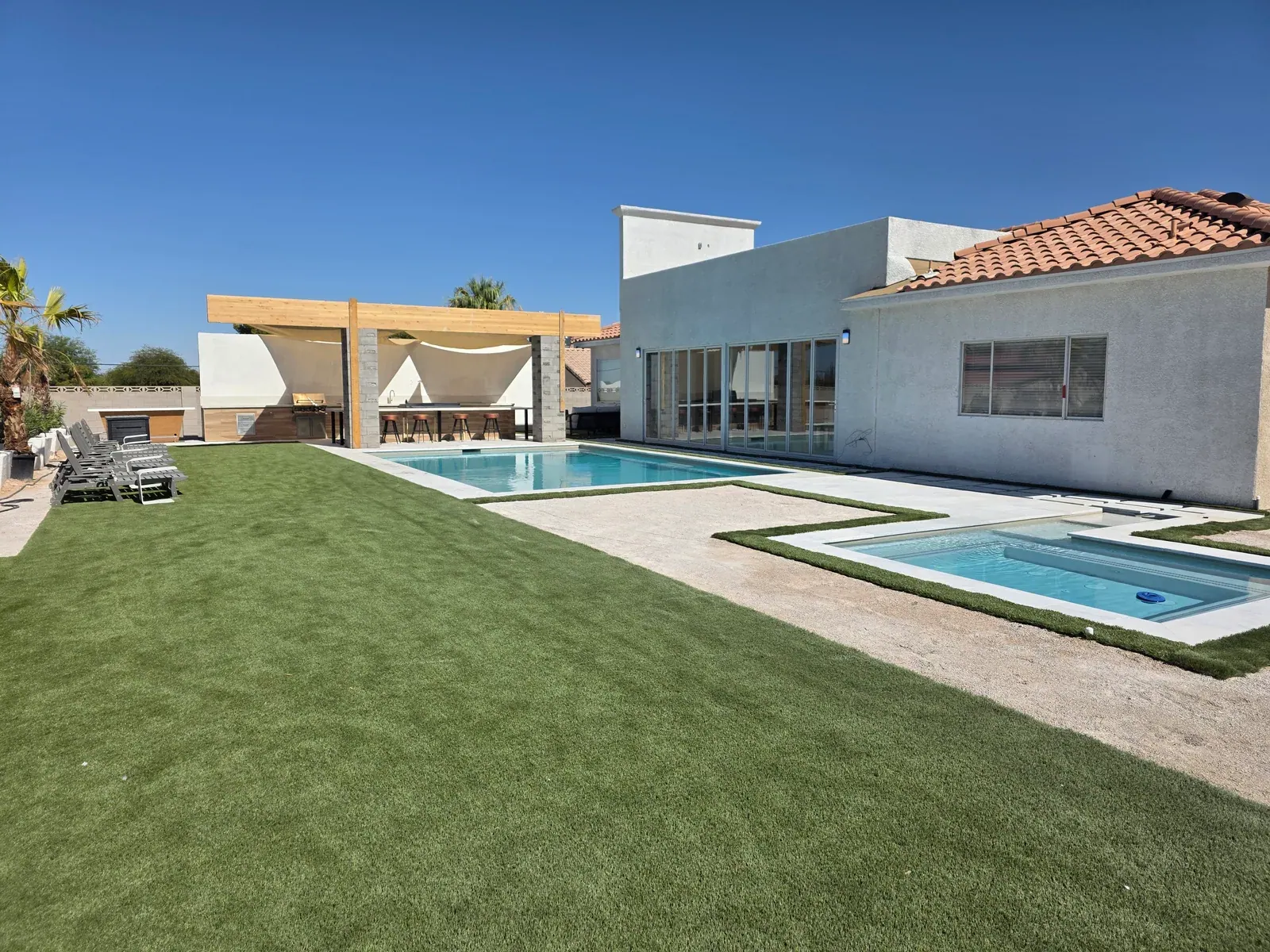
Teams connect in the gaps, not the sessions. A pool, a game room, somewhere to sit outside in the evening — these do more for how the group feels about each other than a facilitated exercise. Build the afternoons so that people can use them, and resist filling every hour to justify the trip's cost. The unfilled hours are where the value is.
One caution: keep any competitive activity genuinely optional. There is always someone who does not want to play, and quietly excluding them undoes the point of the retreat.
Timing: the weeks to avoid
Las Vegas runs on a convention and event calendar, and it moves prices and availability more than the season does. Large trade shows and major sporting events fill the city, push accommodation rates up sharply, and make everything from restaurant tables to airport queues slower. Before fixing a date, check what is on that week — a shift of seven days can change the cost of the whole trip.
On weather: summer is very hot, regularly above 100°F from June through August, which is fine indoors but limits daytime use of anything outside. Spring and autumn are the comfortable windows. Winter is mild and noticeably quieter.
Practicalities worth confirming before booking
- Whether the whole property is yours, or shared with other guests.
- The room-by-room bed list — offsites usually mean one person per bed, which cuts capacity.
- Bathroom count relative to headcount; mornings depend on it.
- Seating capacity at one table, indoors and out.
- Parking, if anyone is driving in.
- Check-in and check-out times against your first and last sessions.
- Whether your plans count as an event under the property's rules — bringing in outside vendors, caterers or non-staying guests usually needs approval in advance.
- An invoice or receipt suitable for expensing, if that matters to your finance team.
The short version
Fly everyone into one easy airport, base the team somewhere they can actually be together, schedule less than you think you should, and eat together every day. The trip will feel worth it, and the work will be better for it.
If a private villa fits your team, you can see the layout and sleeping arrangements, look around the property, or send us your dates and group size and we will tell you honestly whether it suits.